What are the differences between dry-age beef and supermarket beef?
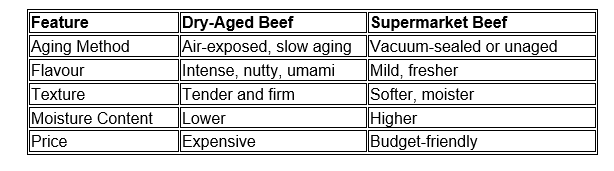
The main differences between dry-aged beef and supermarket beef come down to flavour, texture, moisture content, aging process, and price. Here’s a detailed breakdown:
1. Aging Process
Dry-Aged Beef:
- Aged in a controlled environment (temperature, humidity, airflow) for 2 to 8 weeks or more.
- The meat is exposed to air, allowing enzymes to break down muscle tissue.
- The outer layers dry out and form a crust, which is later trimmed.
Supermarket Beef (Wet-Aged or Unaged):
- Usually wet-aged (vacuum-sealed and aged in its own juices for a few days to a week).
Some supermarket beef is not aged at all—processed and shipped quickly to retain moisture and shelf life.
2. Flavour
Dry-Aged Beef:
- Deep, rich, and concentrated flavour.
- Often described as nutty, earthy, or umami-rich, with a slight funk (like aged cheese).
Supermarket Beef:
- Milder, fresher taste.
- Lacks the complexity of dry-aged beef.
3. Texture
Dry-Aged Beef:
- More tender due to enzymatic breakdown of muscle fibbers.
- Firmer bite due to moisture loss.
Supermarket Beef:
- Moist and softer, but not necessarily as tender.
Higher water content makes it juicier but less flavourful.
Moisture Content
Dry-Aged Beef:
- Loses 15–30% of its moisture.
- This concentrates the flavour but reduces the final yield.
Supermarket Beef:
- Retains most of its moisture.
More weight (and juice) per piece, but less flavour intensity.
5. Cost
Dry-Aged Beef:
- Expensive due to time, storage, and weight loss.
- Often sold at premium steakhouses or specialty butchers.
Supermarket Beef:
- Affordable and widely available.
Focus is on mass production, longer shelf life, and lower cost.
Summary Table